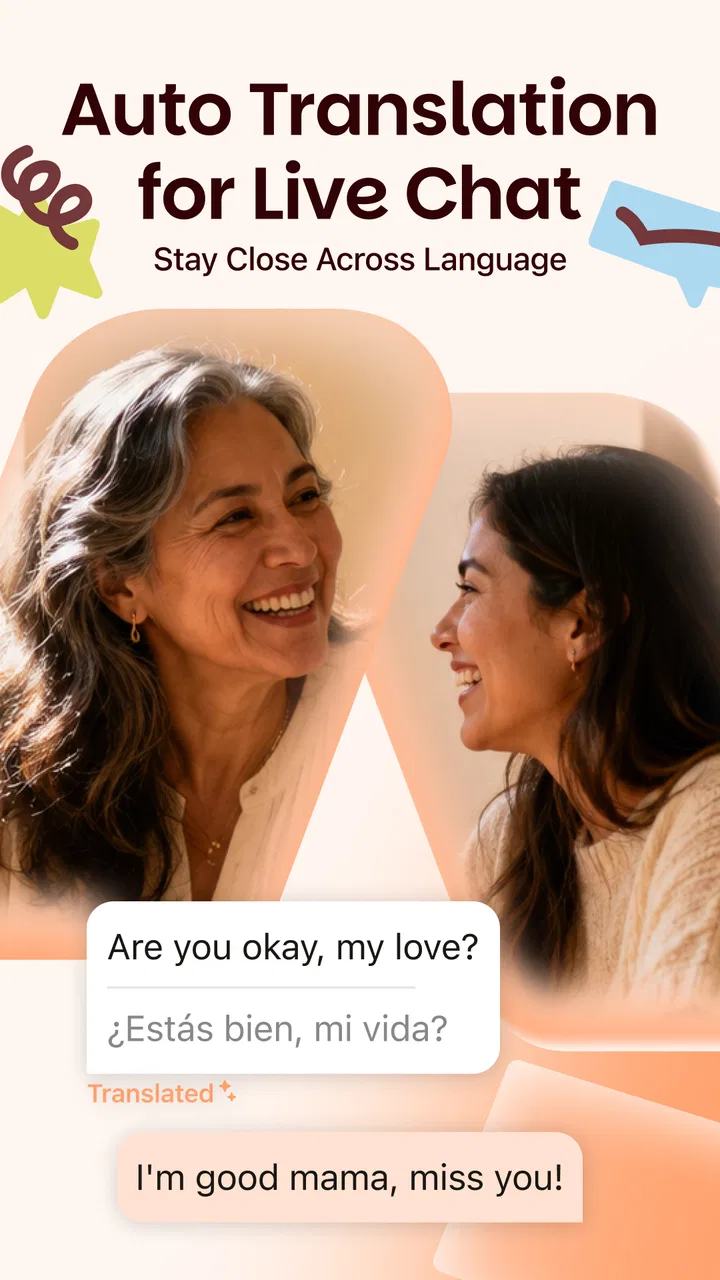
Intent – The Chat translator
- 4.0
- Rating
- 1.00M
- Installs
- Free
- Price

 Analysis by App-foxy
I approached Intent – The Chat translator as a practical communication tool rather than another app I would open out of curiosity and then forget. Its purpose is easy to understand: it provides real-time translation for text and voice. That makes it relevant when a conversation moves between languages and stopping to copy, paste, or switch between separate tools starts to feel awkward.
My first impression is that this is a focused communication app from Intent Inc. It is free, available for Android devices running version 7.0 or later, and carries a Teen content rating. The app reached the store on October 21, 2025, and its current version is 0.3.6.9. Those details matter less than the central question: does a dedicated translator make everyday conversations easier than the usual alternatives?
After using it as a decision rather than a novelty, I think the answer depends on how you communicate. If you regularly exchange short messages or speak with someone who uses another language, the direct chat-and-translation approach is appealing. If you mainly need careful translations for work, study, travel planning, or official documents, I would judge it against more established translation utilities before making it your only option.
You May Also Like

 Blood Strike: 2.5 Anniversary
Blood Strike’s Loadouts Turn Every Drop Into a Tactical Gamble
A close look at Blood Strike’s custom loadouts: how fast access to signature weapons reshapes its battle royale rhythm, rewards preparation, and narrows the gap between fights.

 Pandora - Music & Podcasts
Pandora’s Music Is Easy to Start, but Harder to Recover
Pandora’s strength is its low-effort path from a seed to a station. Its weak spot is how much confidence it asks you to place in connection, setup, and quiet recovery.

 8 Ball Pool
 Is Built on Rivalries, Rematches, and Routine
A close look at the rivalries, rematches, shared routines, and unanswered safety questions that turn a quick pool match into a persistent mobile community.

 Samsung Music
’s Quiet Strength Is Playing What You Already Own
Its reach comes less from spectacle than from dependable access to a personal library. That simplicity is both the app’s strongest retention engine and its ceiling.

 AccuWeather: Weather Radar
AccuWeather Review: A Quick, Clear Forecast for Everyday Decisions
For everyday plans, the best forecast is the one you can understand quickly. AccuWeather makes rain timing, radar, and local conditions easy to act on, with a few trade-offs.

 Hill Climb Racing
Why Hill Climb Racing Still Turns Crashes Into One More Run
A tiny car, a bumpy hill and one more upgrade: Hill Climb Racing keeps resurfacing because its simple chaos makes every near-miss feel personal.
More From Our News Desk



How I would decide whether Intent fits my conversations
I would begin with the kind of communication I need. A chat translator is most useful when the conversation is active and conversational: asking a question, clarifying a detail, replying to a family member, or handling a quick exchange with someone nearby. The value is not simply that words change from one language to another. The value is that translation sits closer to the conversation itself.
That distinction separates this app from a traditional dictionary or a general-purpose translation page. With those tools, I often have to decide which text to copy, where to paste it, and how to return the result to the person I am speaking with. A dedicated chat experience can reduce that mental overhead. Even a small reduction matters when both people are waiting for an answer.
Voice changes the decision further. Typing is manageable for a short message, but it becomes tiring when the exchange is spontaneous. Someone asking for directions, a traveler checking a reservation detail, or a relative leaving a spoken message may prefer talking instead of composing every sentence. Real-time voice translation is therefore the feature I would examine most closely before choosing this app.
I would also consider the consequences of an imperfect translation. In casual conversation, an awkward phrase may be easy to repair by asking the person to repeat it. In a medical, legal, financial, or employment situation, that same uncertainty can cause real trouble. I would not treat any conversational translator as a substitute for a qualified human interpreter when the meaning has serious consequences.
The app’s public reception is encouraging without being a reason to stop evaluating it. It has a 4.6 average from around 300 ratings and has passed 100,000 installs. I read those figures as signs of early interest and generally positive user response, not as proof that every language pair or speaking style will work equally well for me.
What I would test before relying on it
My first test would be a short exchange using the language combination I actually need. I would avoid rehearsed textbook sentences and use the kind of wording I normally send: abbreviations, polite softeners, incomplete thoughts, and references to earlier messages. Translation quality can feel excellent in a demonstration and less comfortable in a real conversation full of context.
Next, I would try voice in a quiet room and then in a normal environment. Speech recognition is not only about language knowledge; it also depends on how clearly people speak and how much background noise surrounds them. I would pay attention to whether the app handles pauses and corrections gracefully. If I have to repeat every sentence or manually fix most results, the convenience advantage becomes much smaller.
A useful third test is a two-person conversation where each participant takes turns naturally. One person should not have to become the permanent operator while the other waits. I would check whether the flow feels balanced, whether translated replies are easy to identify, and whether the exchange remains understandable after several turns rather than just one isolated sentence.
Finally, I would try a message containing a name, place, date, or product reference. These details are where a translation can look fluent while still becoming misleading. I would keep the original wording visible whenever possible and confirm important details directly. That habit is more valuable than blindly trusting a smooth-sounding result.
Where the focused chat approach wins
The strongest case for Intent is the moment when translation is part of a live exchange rather than a separate task. I can imagine using it while helping a visitor at a small business. The visitor asks a question in their language, I respond in mine, and the conversation proceeds without either of us needing to find a different tool for every turn. That is a modest scenario, but it is exactly where friction becomes noticeable.
It could also suit families who communicate across languages. A relative may be comfortable speaking but less confident writing. Another family member may understand some of the language but not enough to catch every detail. Voice and text in the same communication setting can make the exchange feel less like an exercise and more like a normal conversation.
Another practical use is coordinating with a service provider. Imagine messaging a repair worker, host, driver, or local shop while traveling. The messages are usually short, but they can arrive quickly and contain follow-up questions. A chat-centered translator is better suited to that rhythm than opening a dictionary for each sentence.
The real advantage is reduced conversational friction, not the novelty of automatic translation. That is the lens I would use when comparing it with alternatives. If I already have a reliable translation app and do not mind switching between screens, Intent may not transform my routine. If I regularly lose time copying messages or repeating myself because of language barriers, the dedicated format has a clearer reason to exist.
Three less obvious ways I would use it
First, I would use it as a clarification layer rather than trying to translate an entire conversation perfectly. When a sentence feels ambiguous, I could restate the idea in simpler language and send that version. Short, concrete wording usually gives a translation system less room to misread intent. This is especially useful for instructions such as meeting points, opening times, or what someone should bring.
Second, I would create a personal habit of confirming key nouns. Names, addresses, street names, model numbers, and local expressions deserve a second look even when the surrounding sentence sounds natural. I would keep those items in the original language in my notes or repeat them back to the other person. This workflow turns the app into a communication aid without pretending that every output is authoritative.
Third, I would use voice for speed but text for a record. A spoken exchange may be ideal for solving a problem quickly, while a typed follow-up can make the final arrangement easier to review. For example, after discussing a pickup location, I would send a short written confirmation containing the agreed place and time. That combination uses each input style for what it does best.
These habits also reveal a limitation: translation quality is only one part of communication. Tone, humor, politeness, and cultural assumptions can disappear even when the basic meaning survives. I would avoid using an automatically translated sentence to make a delicate apology or negotiate a sensitive disagreement without checking how it sounds to a fluent speaker.
Why the free price matters, and what it does not solve
Intent is free, which lowers the barrier to trying it alongside another translation tool. I would not need to commit money before discovering whether its chat flow matches my habits. That makes experimentation sensible: install it, run the same small set of real examples through it, and compare the amount of editing and switching required.
Free also changes who might benefit. A student, occasional traveler, or family member who only needs translation from time to time may prefer a focused tool that can be tested without a purchase decision. For someone with a constant professional need, however, price should not be the only criterion. Reliability, clarity, and the ability to verify important content matter more than avoiding a fee.
I would also remember that an app can be free while still costing attention. If the interface makes me repeat steps, correct every result, or explain to another person how to use it, the practical cost is time. The right comparison is not simply “free versus paid.” It is “which option lets both people understand each other with the least risk and effort?”
Where a different category may fit better
The usual alternatives fall into several groups, and each has a legitimate advantage. A general translation app may be better when I need to translate a sign, a longer passage, or a single phrase without starting a conversation. A dictionary may be better when I want definitions, examples, or a deeper understanding of one word. A keyboard translator may be more convenient when nearly all my communication happens inside another messaging service.
For voice-only situations, a dedicated speech translation tool could be preferable if it offers a workflow designed around listening and speaking rather than chat. I would choose that category when I am moving through a conversation quickly and do not need a persistent text exchange. Intent makes more sense to me when text and voice belong to the same ongoing interaction.
Human help remains the better choice for high-stakes communication. A professional interpreter can ask clarifying questions, recognize context, and explain cultural meaning in a way an automated system may not. I would use Intent to prepare questions or handle routine coordination, not to replace expert assistance during a legal appointment, medical consultation, or formal contract discussion.
There is also a case for skipping a dedicated translator altogether. If I communicate in only one language, rarely meet multilingual contacts, and already have a translation function built into tools I use every day, another app may add clutter without solving a real problem. The fact that Intent is free does not make it necessary for everyone.
Users should also think about the other person’s comfort. A translation workflow can feel efficient to the person holding the phone and awkward to the person waiting for the result. I would explain what I am doing, keep messages short, and avoid making the other participant feel tested. The best app cannot repair a conversation that has become too mechanical.
The practical cost of switching
Moving from a familiar translator to Intent would not be difficult in principle, but there is still a learning cost. I would need to establish which situations deserve chat, which deserve voice, and when I should verify a result elsewhere. I would also need to make sure the person I am speaking with understands the turn-taking pattern instead of assuming the app will manage everything automatically.
My switching test would last through several ordinary interactions rather than one impressive demonstration. I would record how often I had to leave the conversation, how many messages needed rewriting, and whether the other person understood the translated wording without extra explanation. Those observations tell me more than a single successful sentence.
I would keep my previous translation method available during the trial. That is not a criticism of Intent; it is sensible planning. If an important message arrives, I want a way to cross-check it. Once the new workflow proves faster and clear enough for low-risk conversations, I can make it my first choice in those situations while retaining the older option for documents or unusual language problems.
The app’s Teen rating is another small but useful signal for households. I would still supervise how younger users handle conversations with strangers, especially because translation can make communication feel easier than it really is. Language assistance should not be confused with identity verification, safety screening, or trustworthy intent from the person on the other side.
My recommendation after weighing the trade-offs
I recommend Intent – The Chat translator to people who need frequent, informal communication across languages and want text and voice translation close to the conversation. Its strongest appeal is not that it promises to solve every language problem. It is that it targets the awkward middle ground between typing everything manually and constantly jumping between separate translation tools.
I would start with low-risk, everyday tasks: greeting someone, asking for directions, arranging a simple meeting, checking a routine service detail, or keeping in touch with a multilingual friend. I would use short sentences, confirm names and numbers, and send a written recap after an important voice exchange. Those habits make the app more useful while limiting the consequences of an imperfect result.
I would not make it my only language resource. For long documents, detailed vocabulary study, formal communication, or situations where a wrong nuance matters, I would choose a specialized alternative or human assistance. That is not a failure of this particular app; it is a reminder that conversational translation and professional translation are different jobs.
Intent Inc. has positioned this as a communication app rather than a broad productivity suite, and that focus works in its favor. The free price makes it easy to test, the current version is 0.3.6.9, and its early reception—an average of 4.6 from around 300 ratings—gives me enough encouragement to try it without treating popularity as proof. With over 100,000 installs, it has also moved beyond being an entirely unknown experiment.
My final decision is straightforward: install it if language barriers regularly interrupt real conversations, especially when voice would be more natural than typing. Skip it if you only need occasional word definitions, document translation, or a tool for high-stakes interpretation. For everyone in between, I would run a careful personal trial and compare not just the translated wording, but the entire experience of keeping two people understood.
FAQs for Intent – The Chat translator
01What is Intent – The Chat Translator app?
Intent – The Chat Translator is an app designed to facilitate seamless communication across different languages within chat applications. It provides real-time translation services, allowing users to send and receive messages in their preferred language. This is particularly useful for international chats in apps like WhatsApp, Messenger, and more.
02How does Intent – The Chat Translator work with other apps?
The app integrates with popular chat applications by overlaying translation features directly within the chat interface. Once installed, you simply select your preferred languages, and the app translates incoming and outgoing messages in real-time, making it easy to understand and respond without switching apps.
03Is Intent – The Chat Translator accurate in its translations?
Intent – The Chat Translator utilizes advanced translation algorithms and AI to provide accurate translations. While it generally offers reliable translations, the quality may vary depending on the complexity of the text and language nuances. It’s best used for conversational phrases and common expressions.
04What languages are supported by Intent – The Chat Translator?
The app supports a wide range of languages, including all major global languages such as English, Spanish, Chinese, French, German, and many more. The app is continually updated to include more languages and dialects, ensuring widespread usability across different regions.
05Does Intent – The Chat Translator require an internet connection?
Yes, the app requires an active internet connection to perform translations. This is because it relies on cloud-based services to provide accurate and up-to-date translations. Users should ensure they have a stable connection to enjoy uninterrupted translation services.
Pros
- Supports multiple languages seamlessly.
- User-friendly interface with intuitive design.
- Fast translation with minimal lag.
- Offline mode for convenient use without data.
- Integrates well with messaging apps.
Cons
- Limited free features; premium required.
- Occasional minor translation inaccuracies.
- Ads can be intrusive at times.
- Requires constant updates for new languages.
- May drain battery during extended use.

Intent – The Chat translator
Gallery